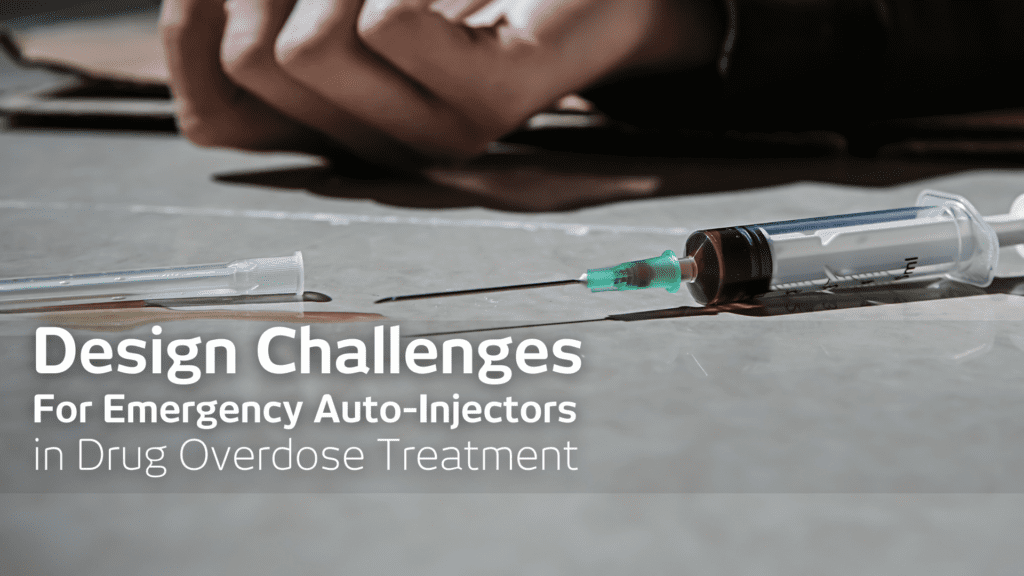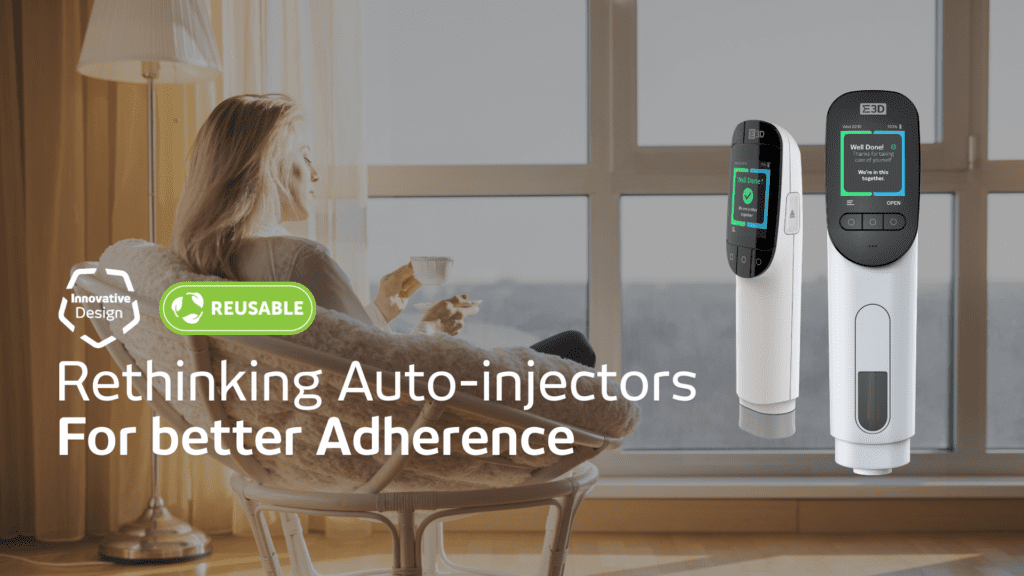


Rethinking Auto-injectors for Better Adherence
Part 1: Connected Devices
In modern healthcare, breakthroughs in treatment are often celebrated — whether they relate to new drugs, novel therapies, or life-enhancing ways of administering medications. But when it comes to real-world outcomes, there’s a significant, persistent issue that is often overlooked.
Meet the “Adherence Shadow” — the major obstacle everyone knows is there, but few talk about.
It’s an uncomfortable truth that even therapies that promise strong clinical outcomes often fall short in real-world settings. And this is not because the drugs don’t work — but because patients don’t always take them as prescribed. [A1]
Self-injected Therapies: Beyond the Drug
Recent decades have seen significant growth in the number of injectable treatments being administered in non-healthcare environments, typically at home. This has been enabled by devices such as auto-injectors, which facilitate safe, effective, and convenient self-injection.
For self-injected treatments, medication alone isn’t enough — success hinges on patients’ ability to administer doses correctly, consistently, and with confidence, making adherence a cornerstone of therapeutic effectiveness.
A growing body of evidence shows that patients struggle with self-injection technique, confidence, or adherence across biologics and other injectable therapies, which can directly impact treatment outcomes. Even highly effective medications cannot achieve their intended benefits if doses are missed or administered incorrectly. [A1][A2][A3]
The Hidden Cost of Non-adherence
Medication adherence remains a significant barrier to effective treatment, even with auto-injectors.
Many patients miss doses or inject incorrectly due to factors such as forgetfulness, improper technique or anxiety, – gaps that can have meaningful consequences for long-term disease management and patient outcomes. [A1][A3]
For patients managing chronic or emergency conditions with self-injected therapies, remembering to take medication on time, feeling confident about correctly using a device, or maintaining a consistent injection routine, can be genuinely challenging. [A1][A5]
On the ground, this could be:
• A person with diabetes forgetting to take a dose of insulin after a long day of work
• A teenager skipping a scheduled injection due to anxiety
• A parent struggling to stay consistent with their child’s injection schedule
• Someone prescribed adrenaline for life-threatening anaphylaxis who never practices using their auto-injector — until it’s too late
In these moments, a drug that isn’t administered simply cannot work — no matter how effective that drug is on paper or in closely monitored clinical studies.
Why Do Patients Struggle with Adherence?
Adherence challenges are rarely about neglect; they are rooted in very human realities, such as:
• Anxiety or fear of needles or of making mistakes
• Confusion around device instructions or proper technique
• Side effects associated with the therapy
• Cognitive overload, especially when managing multiple treatments
• Lack of routine, making habit-building difficult
These challenges are especially pronounced with self-injection, where there is often no direct supervision. Unlike oral medication, a missed injection can’t always be “made up” later — timing can be critical to clinical outcomes. [A1][A3][A4]
The Impact of Inconsistency
Non-adherence has far-reaching effects:
• Worsening health outcomes, including disease flare-ups or reduced treatment effectiveness
• Increased healthcare costs due to hospitalizations, emergency visits, or escalated interventions
• Emotional fatigue in patients who feel they are failing — even when they are trying to do their best [A1][A2]
From Device to Partner: The Role of Connected Auto-injectors
Improving real-world healthcare outcomes isn’t only about developing more effective medications — it’s also about designing drug delivery devices that truly work for the people who use them.
Self-injected therapies place a unique burden on patients. Beyond managing their condition, they must remember schedules, overcome fear, and perform life-critical actions — often alone.
What patients need isn’t just another device. “They need a partner”.
Connected auto-injectors can facilitate the next generation of self-administered treatment. These smart devices go beyond delivering medication — they offer timely reminders, real-time feedback, and reassurance throughout the patient journey.
They are designed to:
• Simplify the treatment process
• Build confidence through guided interactions
• Reduce the emotional and cognitive load of managing long-term care
Early evidence indicates that connected auto‑injectors — with features like reminders, usage logs, and real‑time feedback — are associated with higher adherence rates compared with standard self‑injection methods, and that connected medication technologies in general can significantly enhance adherence behaviors. [A1][A5]
At the same time, healthcare providers can gain access — with patient consent — to secure device usage data that helps better understand where support is needed.
Guiding the Patient at Every Step
Connected auto-injectors can:
• Remind patients when it’s time to inject, helping build routine
• Confirm that an injection was properly completed
• Provide real-time alerts if errors occur (such as incorrect positioning of the device)
• Offer visual and auditory guidance and feedback – to make injections feel safer and more manageable [A3][A4]
These devices remind patients that they are not alone. Frequent, supportive interactions can build confidence and create positive habit loops, leading over time to more consistent and effective treatment.
Closing the Feedback Loop for Physicians
With patient consent, connected auto-injectors can securely log usage data, offering healthcare professionals insights into what happens between clinic visits.
This can enable healthcare providers to:
• Provide guidance and reassurance grounded in actual data
• Personalize interventions based on real-world use
• Identify non-adhering patients earlier
• Refine treatment plans by recognizing and addressing behavioral patterns [A1][A5]
A Smarter, More Human-centered System
At scale, improved adherence and connected care can lead to:
• Better patient outcomes with fewer complications
• Reduced medication waste
• Lower burden on emergency and acute care services
• Patients who feel more empowered and in control of their health [A1][A5]
It also supports a more sustainable healthcare system, where resources — from medication to time — are used more effectively.
Conclusion: Not Just a Device, But a Partner in the Journey
The evolution from device to partner reflects a deeper shift in healthcare thinking. Connected auto-injectors are not just technological enhancements — they are companions in care, especially for patients managing complex, long-term therapies.
When drug-delivery devices are designed with empathy, enabled by intelligence, and grounded in real patients’ lives, we don’t just improve adherence.
We improve lives. [A1][A5]
References (Auto-injector Focused)
[A1] The Adherence and Outcomes Benefits of Using a Connected, Reusable Auto‑Injector for Self‑Injecting Biologics: A Narrative Review, Advances in Therapy, 2023.
https://link.springer.com/article/10.1007/s12325-023-02671-2
[A2] Patient adherence to and tolerability of self-administered therapy using electronic autoinjection devices — PubMed, 2012.
https://pubmed.ncbi.nlm.nih.gov/22390218/
[A3] Enhancing adherence to self-injection regimens by connected devices — ONdrugDelivery review.
https://ondrugdelivery.com/enhancing-adherence-to-self-injection-regimens-by-connected-devices/
[A4] Healthcare Professional and Patient Usability Evaluation of Auto-injector Devices SB4 and SB5 — PubMed, 2023.
https://pubmed.ncbi.nlm.nih.gov/37615857/
[A5] Real-world satisfaction and experience with auto-injector device for ofatumumab in MS — BMC Neurology, 2025.
https://bmcneurol.biomedcentral.com/articles/10.1186/s12883-024-04007-1