

Key Challenges in the Design of Emergency Auto-Injectors for Drug Overdose
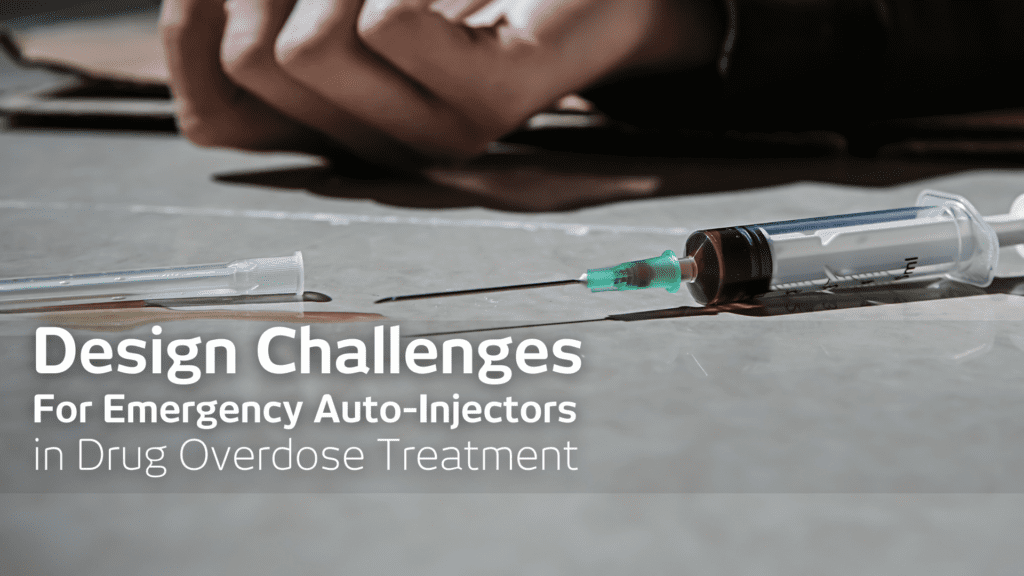
Drug overdose is a life-threatening emergency that can occur suddenly and escalate rapidly due to excessive intake of opioids or other substances. Overdoses may result from prescription medications or illicit drugs, affecting individuals across all ages and medical histories, and can lead to respiratory depression, unconsciousness, or death if prompt treatment is not provided. Because these emergencies often occur outside clinical settings, immediate intervention by non-professional caregivers or bystanders is frequently required.
One of the most effective treatments for opioid overdose is the rapid administration of an antidote, delivered through an intramuscular auto-injector. These devices are engineered to deliver a precise dose automatically, even through clothing, ensuring rapid therapeutic effect. While nasal sprays provide a needle-free alternative, auto-injectors remain highly valued for their speed, accuracy, and consistency in critical situations. Reliable auto-injector performance can be the difference between life and death.
Reliable Design: The Heart of Auto-Injector Functionality
Designing a dependable emergency auto-injector requires meticulous engineering to ensure accuracy, safety, and effectiveness. This includes implementing features that minimize risk of failure and align with the “5 Rights” of medication administration:
- Right Patient: Confirm the device is used on the correct individual.
- Right Route/Place: Ensure the injection reaches the correct target tissue.
- Right Medication: Verify that the correct antidote is delivered in a stable, effective formulation.
- Right Dose: Provide the appropriate amount of medication to counteract the overdose.
- Right Time: Enable immediate deployment, since timing is critical.
Multiple factors can affect successful delivery, including body size and composition, anatomical variability, patient positioning, and the user’s training or stress level.
Design Challenges in Emergency Use
Emergency auto-injectors are intended for use by patients, caregivers, or first responders outside healthcare environments. Since these devices are often single-use, achieving a successful first injection is critical. Reliability engineering is therefore essential, and FDA guidance emphasizes stringent performance standards for life-threatening scenarios (FDA, 2020).
Key considerations include:
- Packaging and Safety: Devices must be easy to prepare and safe to handle.
- Environment and Portability: Auto-injectors must function reliably across diverse real-world conditions.
- Injection Mechanism: The activation force and needle specifications must ensure accurate medication delivery.
- Material Selection and Needle Design: Materials and needle characteristics must accommodate patient variability and clothing thickness.
- User Feedback: Audible, visual, or tactile indicators guide correct administration.
Achieving consistent needle penetration to the target tissue is critical, accounting for variations in body size, weight, and tissue composition.
E3D’s Approach: Flexi-Q E-EAI
At Elcam Drug Delivery Devices (E3D), the Flexi-Q EAI platform addresses these challenges by combining a robust spring-based mechanism with optimized needle length and force. This design allows consistent drug delivery across different patient populations, from small children to adults, with medication volumes ranging from 0.15 mL to 1 mL and tissue depths of 13–16 mm. The device delivers a full dose in less than a second, helping mitigate the effects of user variability and environmental factors.
Design Process for Emergency Auto-Injectors
Developing a reliable auto-injector involves several critical steps:
- Identify Performance Requirements: Define criteria using the “5 Rights” framework.
- Learn from Existing Designs: Evaluate current devices to identify opportunities for improvement.
- Conceptual Design: Collaborate across disciplines to balance usability, mechanical function, and immediate deployment.
- Feasibility Testing: Test prototypes with industrial designers and engineers.
- Evaluation: Assess manufacturability, reliability, and cost-effectiveness.
- Link Design to Actions: Ensure mechanisms and safety features meet the intended performance outcomes.
E3D’s development of Flexi-Q E-EAI incorporated these steps, resulting in a device optimized for consistent, safe, and effective emergency use.
Conclusion
Designing emergency auto-injectors is a complex process requiring careful consideration of performance, usability, and patient variability. From precise needle penetration to accurate medication dosing, every detail must be optimized to ensure successful intervention. E3D’s Flexi-Q EAI demonstrates how rigorous design and engineering can create reliable, life-saving solutions for overdose emergencies.
References
- Centers for Disease Control and Prevention (CDC). (2017). Vital Signs: Prescription Opioid Overdoses. https://www.cdc.gov/mmwr/volumes/66/wr/mm6645a2.htm
Note: Some context and data on opioid overdoses in this article are based on CDC studies and publications. - U.S. Food and Drug Administration (FDA). (2020). Guidance for Industry: Auto-Injector Devices. https://www.fda.gov/medical-devices/